Cost of Living in Myrtle Beach for 55+ Homebuyers
Relocating to the South Carolina coast is a dream for many empty‑nesters and retirees. Myrtle Beach combines warm weather, beautiful beaches, and an active social scene with attractive tax policies and affordable housing. Before making the move, however, it is important to understand the full cost of living and how it compares to other regions. This guide walks through the major expenses, such as housing, property taxes, HOA dues, utilities, and everyday spending, so that you can plan your budget with confidence.
Housing and HOA Fees
Housing is often the largest line item for retirees. In master‑planned communities geared toward adults aged 55 and older, homes are designed to be low‑maintenance and energy efficient. Buyers can choose between attached villas and detached single‑story homes with open floor plans, flexible rooms, and modern finishes. Del Webb communities, for example, offer resort‑style living with access to clubhouses, pools, fitness centers, and social activities. Pricing varies based on lot location, square footage, and structural upgrades.
In addition to the purchase price, most active adult neighborhoods collect a monthly or quarterly homeowners’ association (HOA) fee. These dues typically cover lawn maintenance, common‑area upkeep, and access to amenities such as fitness centers, pools, and social programming. High‑amenity communities like Del Webb at Grande Dunes and Cresswind at Market Common have higher dues to support their extensive facilities, while smaller neighborhoods such as Spring Forest or Lakeside Crossing charge less but still provide basic services. When comparing communities, ask for a breakdown of what the fee includes and whether it covers services like cable or trash removal.
Property Taxes and Retirement‑Friendly Policies
South Carolina’s property tax system is one of the reasons Myrtle Beach remains an appealing destination for retirees. The state assesses primary residences at a 4 percent ratio of fair market value, while second homes and investment properties are assessed at 6 percent. This lower assessment ratio translates to a smaller tax bill for full‑time residents.
Homebuyers aged 65 or older may also qualify for the state’s homestead exemption, which exempts a portion of fair market value from property taxes on a primary residence. To receive the exemption, homeowners must meet eligibility requirements such as being a resident for at least one year and filing an application with the county auditor. These benefits, combined with comparatively low millage rates in Horry County, make property taxes modest compared to many northeastern and western states.
Another advantage for retirees is the absence of state tax on Social Security benefits and railroad retirement income. Combined with the relatively low sales tax rates, these tax policies help many retirees stretch their income further.
Utilities, Groceries, and Transportation
Everyday expenses are a significant factor when planning a relocation. Myrtle Beach’s cost of living is generally moderate. Monthly utility bills, which include electricity, water, and gas, are typically in a manageable range, and rates remain stable compared to national averages. Groceries and transportation costs are also reasonable; the area’s competition among supermarkets and gas stations keeps prices in check. Public transportation is limited, so most residents rely on personal vehicles. Plan for fuel, insurance, and vehicle maintenance in your budget.
Healthcare and Insurance Considerations
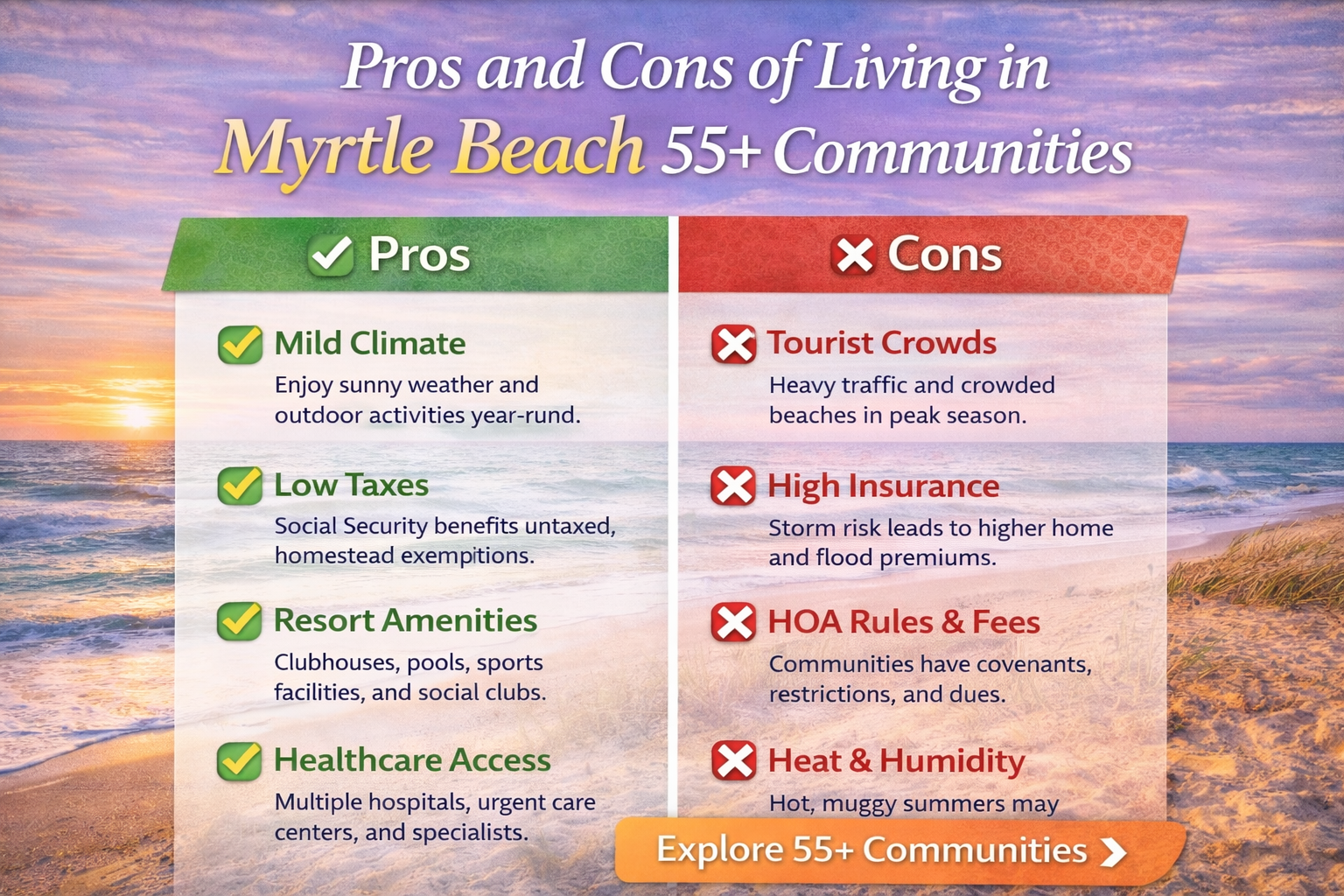
The Grand Strand is served by multiple hospital systems, urgent care centers, and specialty practices, ensuring strong access to healthcare. Because the region is on the Atlantic coast, homeowners’ insurance can be more expensive than in inland areas due to hurricane and wind risk. Buyers may need separate policies or riders for wind and flood coverage, and costs can vary based on proximity to the ocean, elevation, and building materials. It is prudent to consult a licensed insurance agent early in the home‑buying process to understand potential premiums and options. Many 55+ communities are located slightly inland or on higher ground, which may lower coverage costs.
Comparing Communities by Cost
When weighing housing expenses, property taxes, and association fees, it helps to look at specific neighborhoods:
- Del Webb at Grande Dunes is a luxury coastal community with an impressive clubhouse, indoor and outdoor pools, tennis and pickleball courts, and membership at the Grande Dunes Ocean Club. The HOA fee supports these amenities and lawn maintenance. Home prices and dues tend to be higher, but residents enjoy access to a private beachfront facility and a full social calendar.
- Cresswind at Market Common offers resort‑style amenities and a strong social program. HOA dues include lawn care, maintenance of a large clubhouse, fitness facilities, and events. Buyers enjoy walkable access to shops and restaurants in the Market Common district.
- Seasons at Prince Creek West provides gated privacy, a large clubhouse with indoor and outdoor pools, and adjacency to the Tournament Players Club golf course. Dues cover extensive amenities and activities.
- Spring Forest is an established Murrells Inlet neighborhood with lower HOA fees. It features mature landscaping, a community center, and a pool. Lawn care and RV/boat storage are included, making it an affordable option.
- Lakeside Crossing in Conway offers budget‑friendly homes and amenities, including a clubhouse, pool, and a catch‑and‑release lake. Dues tend to be modest, which can appeal to cost‑conscious buyers.
Planning Your Budget
To create a comprehensive Myrtle Beach retirement cost breakdown, consider the following steps:
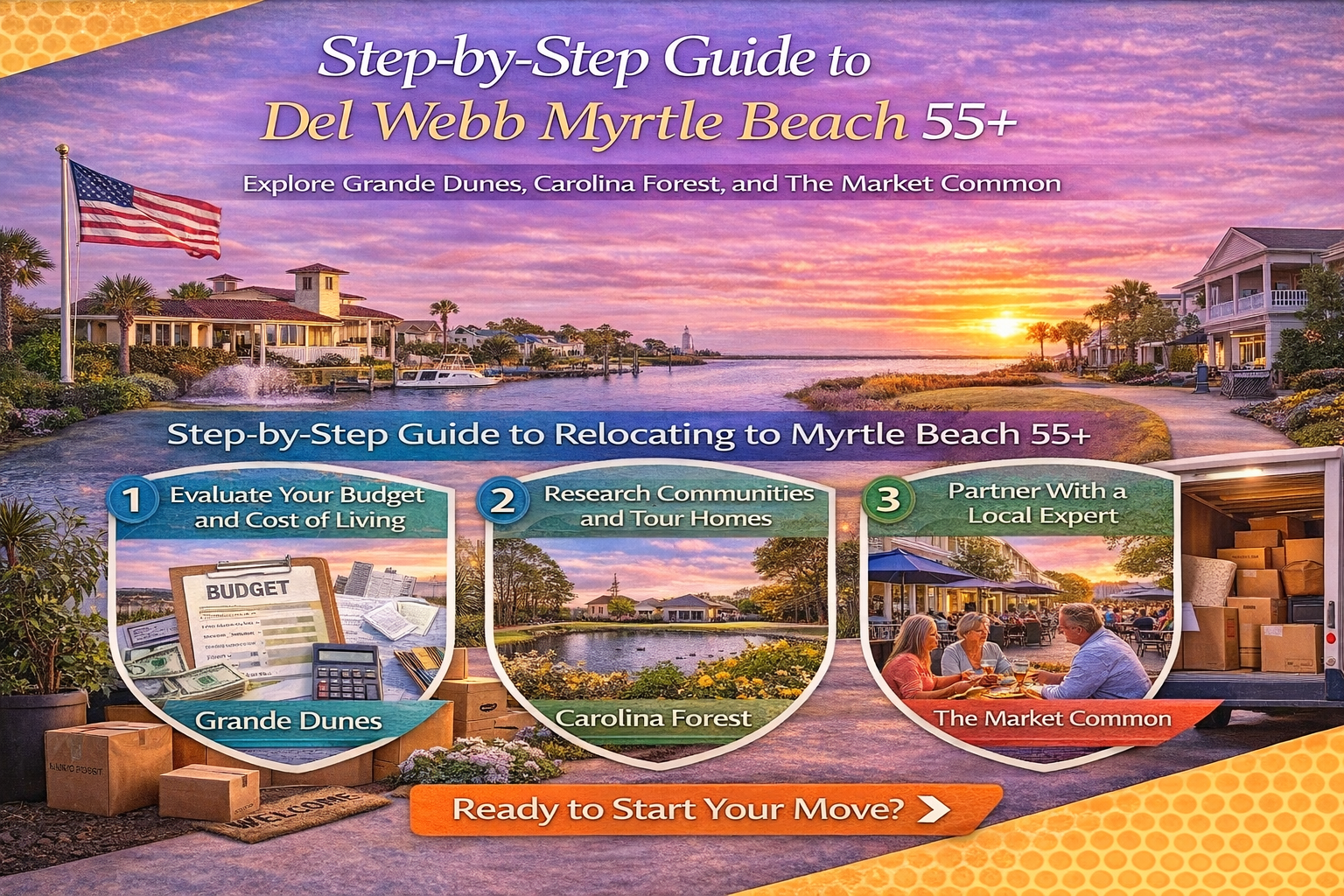
- List all anticipated expenses: purchase price, HOA fees, property taxes, homeowners’ insurance, utilities, groceries, transportation, and healthcare. Build a monthly and annual budget.
- Verify tax benefits: confirm your eligibility for the 4 percent assessment ratio and homestead exemption by contacting the county assessor and auditor offices. Factor the absence of state taxes on Social Security benefits into your calculations.
- Compare HOA structures: ask for detailed fee schedules and a list of included services from each community. Consider whether you want premium amenities or prefer lower dues with fewer perks.
- Evaluate insurance options: speak with local insurance agents about homeowners, wind, and flood policies. Costs can vary significantly, so obtaining quotes early helps avoid surprises.
- Account for lifestyle spending: include travel, dining, entertainment, and hobbies in your budget. Many retirees join clubs, take classes, or travel, which adds to monthly costs.
- Work with a local expert: a real‑estate professional familiar with Myrtle Beach’s 55+ communities can help you compare pricing, incentives, and lot premiums. They can also guide you through the tax and insurance landscape and connect you with trusted service providers.
Understanding the cost of living in Myrtle Beach will help you confidently assess whether the area aligns with your financial goals. By carefully reviewing each expense category and taking advantage of South Carolina’s retirement‑friendly tax policies, 55+ homebuyers can enjoy coastal living with the peace of mind that their budget is secure.
Ready to Explore Your Options?
If you’re considering a move to a 55+ community in Myrtle Beach and want a personalized cost breakdown, we’re here to help. Contact us to compare communities like Del Webb at Grande Dunes, Cresswind at Market Common, Seasons at Prince Creek West, Spring Forest, and Lakeside Crossing. We can provide detailed information on pricing, HOA fees, tax benefits, and long‑term value.